

Breaking the Fast Without a Meal — Feeding the Fasting With Dignity
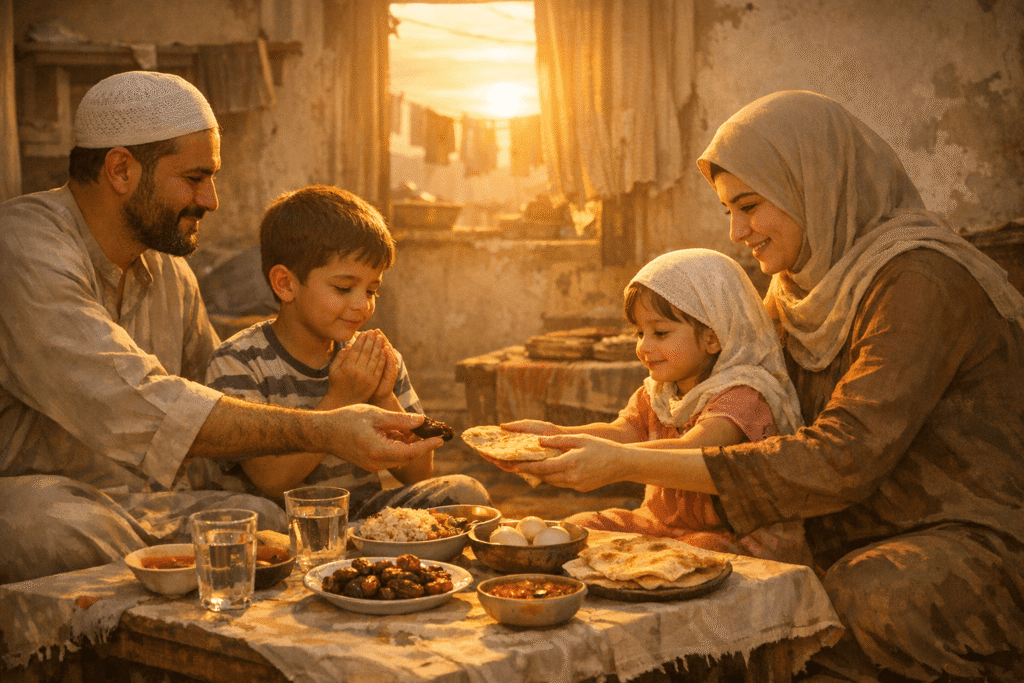
Real Challenges at Iftar: Families Without Prepared Meals
For many families observing Ramadan, the moment of iftar—the breaking of the fast at sunset—is a deeply anticipated and spiritual time. Yet, there are real challenges when families reach this moment without a prepared meal. Economic hardship, disruptions caused by conflict, or lack of access to food supplies can mean that some reach sunset with empty tables. This can create not only physical discomfort but emotional and psychological strain. Without a ready meal, the experience of iftar shifts from one of peaceful reflection and gratitude to worry and uncertainty about how to break the fast.
Such situations are not uncommon in many parts of the world, especially in war-torn or economically deprived areas where food insecurity is widespread. The absence of a prepared meal can delay breaking the fast or force compromises on the quality and dignity of the iftar experience. This challenge highlights the importance of community and charitable support during Ramadan to ensure no one must break their fast without nourishment.
Prioritizing Children During Ramadan: Parental Perspectives
Prioritizing children at iftar reflects a broader parental instinct to shield the most vulnerable from hardship. It also shapes family dynamics in profound ways. Parents may delay eating or reduce their portions to stretch food further, maintaining a sense of dignity and care within the household. This behaviour exemplifies the spirit of Ramadan, where sacrifice and care for others are central themes.
Such prioritization can also inspire community-wide responses, as families and charities seek to support those in need to ensure all children receive adequate nourishment during this holy month.
The Meaning of Timing and Dignity at Iftar
In Islam, the timing of iftar holds special significance. Breaking the fast immediately at sunset is prescribed and is seen as a moment filled with mercy and spirituality. This punctuality respects the fast and honours the efforts of those who have abstained throughout the day.
Dignity at iftar means more than just timing. It encompasses the manner in which people break their fast—calmly, with gratitude, and without embarrassment or haste due to a lack of food. Ensuring that everyone, regardless of their circumstances, can break their fast with dignity requires social awareness and kindness. It is important that no one feels shame or humiliation if their iftar is humble, delayed, or simple.
Maintaining dignity also helps preserve the sense of community and mutual respect during Ramadan. It reminds us that the fast is not only a personal discipline but also a collective experience grounded in empathy.
Feeding the Fasting: Acts of Care Based on Islamic Teachings
Islamic teachings place significant value on “feeding the fasting.” This is an act of care deeply rooted in mercy and communal responsibility. The Prophet Muhammad (Peace Be Upon Him) encouraged kindness and support towards those who fast, and feeding someone who is fasting is considered a rewarding deed.
Feeding the fasting goes beyond obligatory charity; it is a sign of compassion and an acknowledgment of shared hardship. The act is not about display or obligation but about genuine mercy and care. It embodies the prophetic tradition of kindness and unity, where the needs of the fasting are met with humility and warmth.
In practical terms, “feeding the fasting” looks like providing a simple meal or snack to someone who might otherwise break their fast without nourishment. It’s about ensuring that no one faces the iftar hour alone or hungry. This principle encourages communities and individuals alike to prepare for Ramadan with generosity and attentiveness to those around them.
By embracing these values, Ramadan becomes a time not only of personal reflection but also of communal support and mercy that reflects the heart of Islamic teachings.
